1,78,937 students joined Odisha colleges this year, and paid zero admission fee
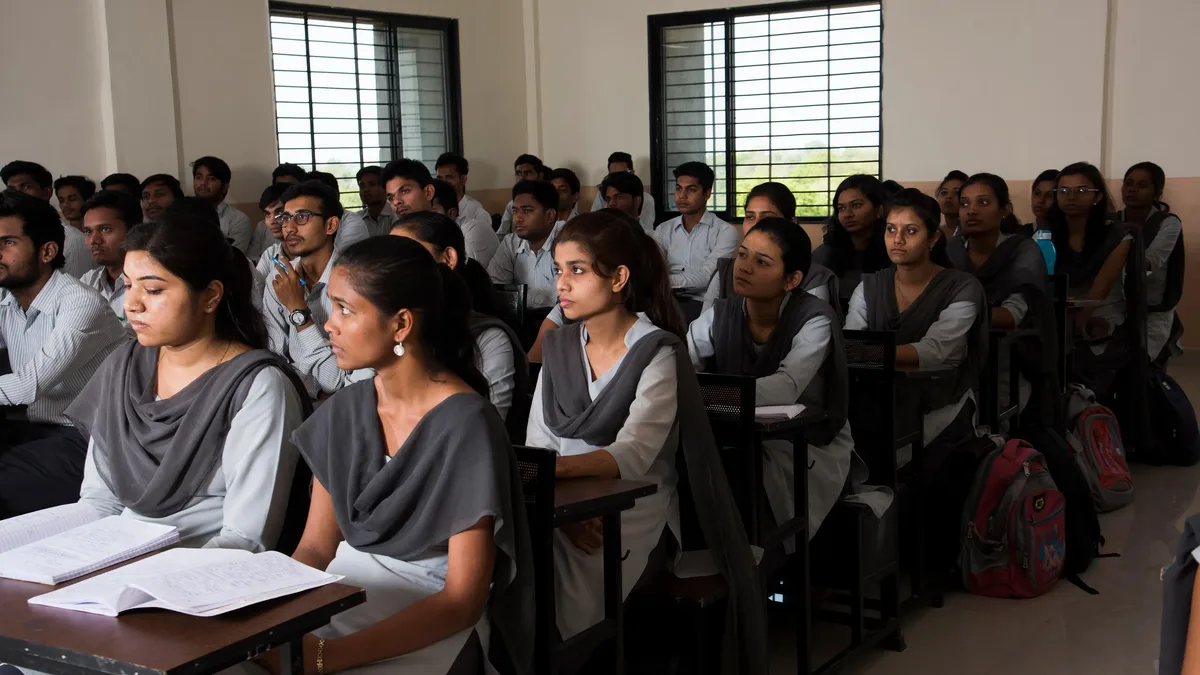
Odisha’s free education scheme has done in one year what years of fee waivers could not. Regular undergraduate admissions in the state rose to 1,78,937 this academic year, up 14,758 from 1,64,179 last year. Students who joined under the scheme paid no admission fee at all.
The numbers came out after a review meeting of the Higher Education Department this week, chaired by Higher Education Minister Suryabanshi Suraj. The scheme behind the rise is called Gyanodaya, formally Gyanodaya – Shikshya Ru Samruddhi. It promises free education from kindergarten to post-graduation in government-run institutions, and the state started it from the 2026-27 academic year.
For the first time, a state has made education free all the way from nursery school to post-graduation, with no income limit on who can claim it.
Kalahandi at 99.09%, Koraput close behind
The biggest surprise in the numbers is where the growth came from. Kalahandi, one of the state’s aspirational districts, recorded an enrolment rate of 99.09%, the highest in Odisha. Koraput followed at 98.82%, then Balangir at 95.57%, Malkangiri at 95.37% and Nuapada at 94.64%.
These are districts that usually lag behind on education numbers. The minister said the admission rates in the aspirational districts were encouraging, and the review also looked at filling vacant teaching and non-teaching posts, the recruitment exams run by the State Selection Board, and projects under PM-USHA.
What the Gyanodaya scheme covers, and what it does not
The scheme covers regular undergraduate and postgraduate courses in state public universities, government colleges and non-government aided colleges. Admission must come through SAMS, the state’s common admission portal. There is no income limit and no category bar. The official guidelines say the scheme applies without any geographical, categorical or income-based restriction.
The government pays the admission fee, development fee and re-admission fee directly to the college, so the student pays nothing at the time of admission. Students who had already paid during the first phase of UG admissions for 2026-27 will get a full refund straight into their bank accounts.
Not everything is covered. The scheme does not apply to self-financing courses, distance and correspondence courses, open education, or institutions running in PPP mode. Professional and technical courses are also out, including BEd, MEd, LLB, BBA, BCA, MBA and MCA. Students should check the official Gyanodaya guidelines before assuming their course is covered.
The 75% attendance rule students must know
Free education under Gyanodaya comes with one clear condition. Students must attend at least 75% of their classes in each academic year. The rule can be relaxed to 65% in special cases. Colleges will check attendance through biometric or other digital records, so the rule is not just on paper.
This is the part students most often miss. A free seat is of little use if poor attendance takes the benefit away in the second year. Students joining under the scheme should treat the 75% mark as part of the deal from day one.
1,819 teaching posts also on the way
The same review meeting looked at the other side of the problem, the shortage of teachers. Recruitment is underway to fill 1,819 vacant teaching posts in colleges and universities across the state. Filling these posts matters because the enrolment jump puts more students in classrooms that were already short of teachers.
The state cabinet had cleared Rs 895.57 crore for the first year of the scheme, with a total of Rs 5,467.55 crore set aside over five years. That money covers the fees the government now pays to colleges on behalf of students.
Why students in other states are watching
No other state has tried free education from KG to PG at this scale. If the enrolment jump holds in the coming years, students in other states will start asking why their governments cannot do the same. For now, Odisha students in government and aided colleges can study without paying admission fees, and students looking for other kinds of fee help can check our scholarships section, including the UP Scholarship 2026-27, which closes for fresh applicants on November 13.
Follow our education news section for more updates on admissions, results and state schemes that affect students.
Frequently Asked Questions
What is Odisha's Gyanodaya scheme?
Gyanodaya, formally called Gyanodaya – Shikshya Ru Samruddhi, makes education free from kindergarten to post-graduation in government and government-aided institutions in Odisha. It started from the 2026-27 academic year and will run for five years, till 2030-31.
Who can get free education under the Gyanodaya scheme?
Students admitted through SAMS, the state's common admission portal, to regular UG or PG courses in state public universities, government colleges and non-government aided colleges. There is no income limit. Students must keep at least 75% attendance to keep the benefit.
Which courses are not covered by the scheme?
Self-financing courses, distance and correspondence courses, open education, courses in PPP-mode institutions, and professional and technical courses such as BEd, MEd, LLB, BBA, BCA, MBA and MCA are not covered.
How much did UG admissions rise in Odisha this year?
Regular UG enrolment rose to 1,78,937 students this academic year, up from 1,64,179 last year, a rise of 14,758 admissions. Kalahandi recorded the highest enrolment rate at 99.09%, followed by Koraput at 98.82%.